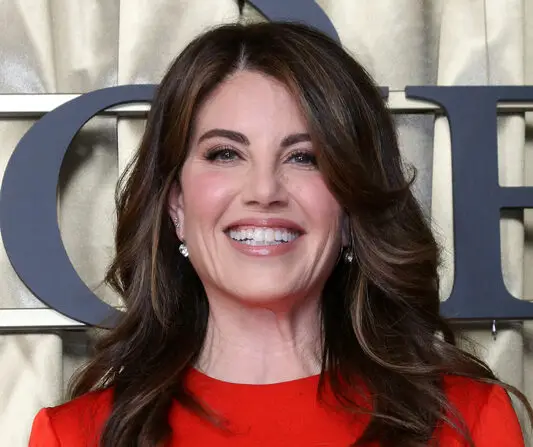
In recent weeks, Monica Lewinsky has sparked intense debate online after making a self-deprecating joke about her past during a financial empowerment panel in West Hollywood. The April 23-24 appearance at HSBC’s “The Financial Glow Up” event at 1 Hotel West Hollywood featured Lewinsky alongside MS NOW co-host Mika Brzezinski and HSBC’s Racquel Oden on a panel titled “The Fluency Gap in Women’s Wealth.” When an audience member asked if she would do anything differently knowing what she knows now, Lewinsky paused with raised eyebrows and a visible smirk, asking whether they were still discussing finance — her answer, she said, could span many topics. Laughter filled the room as she added that she had to be able to laugh at herself in the grand scheme of things.
The viral clip divided viewers sharply. Some praised her resilience and self-awareness while others accused her of constantly revisiting the controversy to maintain relevance, with commenters noting nearly 30 years had passed and the references had grown tiresome. Her defenders countered that she was answering an audience question and argued that criticizing her while former President Bill Clinton faces comparatively little sustained scrutiny reflects the double standard she has spent years highlighting.
During the same West Hollywood event, Lewinsky reflected on how gender shaped the public shaming she endured, questioning whether late-night television would have targeted her so relentlessly had she been a man. The comment aligned with her consistent 2026 message: what happened to her represented not merely personal failure but a systemic response to a woman ensnared in a scandal that powerful men were far better equipped to survive.
Red Carpet Appearances Signal a New Chapter
Lewinsky’s spring 2026 visibility extended beyond panels and podcasts. She walked the red carpet at the 2026 Vanity Fair Oscar Party in Los Angeles wearing a strapless red gown that drew extensive coverage, appearing days after a podcast interview that generated significant media attention. She also attended the premiere of Hulu’s The Testaments at the Academy Museum of Motion Pictures during the same period, maintaining a public presence extending well beyond any single news cycle. Her podcast, Reclaiming with Monica Lewinsky, has released new episodes throughout this stretch, keeping her voice in weekly circulation.
Honored as “Woman of the 21st Century”
Lewinsky’s spring visibility reached a new milestone on May 7, 2026, when the Women’s Guild Cedars-Sinai honored her as its 2026 Woman of the 21st Century at a luncheon at The Beverly Hills Hotel. In conversation with author Jane Buckingham, hosted by Entertainment Tonight’s Nischelle Turner, Lewinsky gave some of her most candid remarks yet about the psychological toll of the scandal’s aftermath, saying there had been “very dark moments” she did not want to sugarcoat. On a recent episode of her podcast, she added that a persistent fear remains — that everything she has built over the past 11 years could be taken away again.
A ‘Public Burning’ and the Name She Refused to Change
Lewinsky’s most striking commentary came in March 2026 during an in-depth interview on The Jamie Kern Lima Show, where she made headlines by comparing her experience to historical persecution. The media frenzy following the scandal’s 1998 exposure amounted to what she now calls a “public burning” — invoking Salem witch trial imagery in which women were condemned by public consensus and destroyed for it. She drew a direct parallel between those women tied to a post and burned at the stake and what she endured as her name became synonymous with the biggest political scandal of the decade.
When host Jamie Kern Lima observed that Lewinsky had fallen in love with her boss, who just happened to be the most powerful man in the world, Lewinsky’s immediate response — “And married, they need to own that” — set the tone for a conversation that refused to let former President Bill Clinton off the hook. Asked why she never changed her name in the scandal’s aftermath, Lewinsky said she had seriously considered it, citing the impossibility of escaping her own name in headlines. But the deeper reason she ultimately refused was identity and principle: she was not ashamed of who she was as a person, even if she regretted specific choices she had made.
Lewinsky also highlighted what she described as a glaring gender double standard. As her interviewer noted, no one had ever asked former President Clinton to change his name. Lewinsky agreed, saying she had never once heard of a man who had been through a scandal being asked the same question. The observation fed into a broader online discussion about how the affair had been framed — as the “Lewinsky scandal” rather than the “Clinton scandal” — from the very beginning.
This run of high-profile appearances positioned Lewinsky as one of the most talked-about public figures in early 2026, delivering her most candid commentary yet about the Clinton affair, its lasting damage, and what she believes the public still misunderstands about who bore the real cost of the scandal. In a May 1 episode of her podcast, she also turned the lens inward, acknowledging that a desire to feel “special” and valued had led her into bad decisions in her early 20s — framing the admission not as an excuse, but as part of a broader conversation about using crisis as a catalyst for personal growth.