
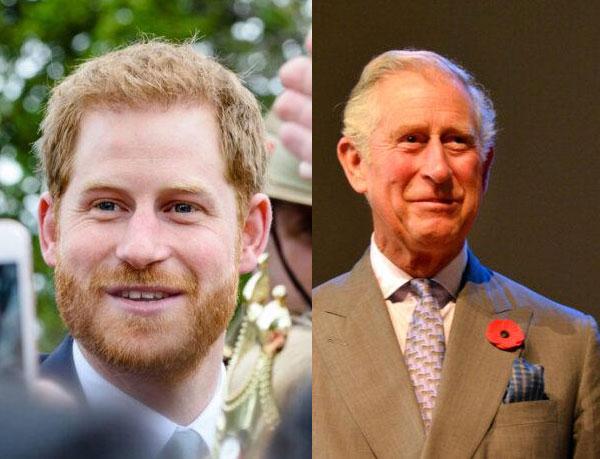
The relationship between King Charles III and his younger son, Prince Harry, has reached what insiders are calling “no relationship right now” — a complete communications blackout with no phone calls, text messages, outreach, or even backchannel contact between father and son.
The estrangement became starkly visible during King Charles and Queen Camilla’s four-day U.S. state visit from April 27 to 30, 2026. Despite Harry and Meghan living in California for the past six years, the king has made no plans to see his son, daughter-in-law, or grandchildren, Prince Archie and Princess Lilibet. The itinerary — Washington, D.C., New York City and Virginia, timed to mark the 250th anniversary of American independence — never included California as a possibility.
Perhaps no moment illustrated the depth of the estrangement more starkly than Harry and Meghan’s decision not to watch the king’s historic April 28 address to a joint session of Congress — not live, not on replay, not at all. Royal commentator Rob Shuter reported that sources close to the situation described the choice as deliberate and “the final break.” What was once unthinkable had become a pointed statement about where things now stand.
The speech itself drew multiple standing ovations as Charles spoke on themes of alliance and shared values. Royal watchers noted that the king invoked language about reconciliation and renewal — striking given the family rift unfolding in the background — though the Palace has not suggested the remarks were aimed at Harry or Meghan.
Private discussions had taken place about a potential meeting in New York, where Charles attended a King’s Trust gala on April 29. But those talks fell apart in the weeks before the visit, after Harry and Meghan’s widely covered trip to Australia in mid-April. Commentators described that tour as the couple successfully pulling off the “half-in, half-out” royal arrangement that the Palace had refused to allow six years earlier. Buckingham Palace sources indicated fears that a meeting would give Harry renewed royal legitimacy and risk overshadowing the state visit’s diplomatic objectives.
Harry and Meghan were excluded from every event during the visit. “Anna [Wintour] and Martha [Stewart] made the guest list,” one insider noted. “Harry and Meghan did not.”
Just four days before Charles landed in Washington, Harry made an unannounced visit to Kyiv on April 23, delivering the keynote address at the Kyiv Security Forum. In his most politically charged speech to date, Harry called on the United States to honor its international obligations to Ukraine and warned that Russia’s forcible deportation of Ukrainian children could constitute genocide under international law. Royal sources viewed the timing as further complicating an already fraught relationship, coming days before Charles was to conduct a carefully orchestrated diplomatic visit to the very nation Harry had just publicly challenged.
At the White House, President Donald Trump was asked about Harry’s Kyiv remarks. Trump said Harry was “not speaking for the U.K.,” adding that he believed he himself was “speaking for the U.K. more than Prince Harry” — before asking, “How’s he doing?”
The freeze in contact had already been documented in early April 2026, when royal insiders told multiple outlets that Charles had been ghosting Harry despite what sources described as olive branches from his son, including hopes of visiting Sandringham. Charles has cited Harry’s ongoing legal battle over security arrangements in the United Kingdom as a barrier to direct contact.
It’s been nearly four years since Charles last saw his grandchildren in person during Queen Elizabeth II’s Platinum Jubilee celebrations. That disconnect gained fresh poignancy on May 6, 2026 — Prince Archie’s seventh birthday — when Charles was opening the traditional spring garden parties at Buckingham Palace, a royal calendar milestone Archie has never attended.
A significant new conflict has emerged between Charles and Prince William over how to handle Harry going forward. According to reports, Charles is now prepared to offer Harry a direct, take-it-or-leave-it truce — but on the condition that Meghan Markle plays no part in the negotiations. Royal sources quoted by OK! Magazine and confirmed by multiple outlets say Charles — still undergoing cancer treatment — is approaching the situation as a father seeking some form of repair. William, by contrast, is urging Charles to cut ties with the couple entirely, arguing the Sussexes are exploiting the king’s goodwill and that any reconciliation risks destabilizing the monarchy and damaging its long-term credibility.
A second source said the dispute now represents “a fundamental divergence in how King Charles and Prince William believe the monarchy should move forward” — going well beyond a simple difference of opinion into a structural disagreement about what the institution is and who it exists to protect.
William views Harry as completely untrustworthy following years of public disclosures, including the memoir “Spare” and a string of televised interviews. Harry’s efforts to reestablish contact with his brother are reported to have been met with silence. Royal editor Russell Myers noted that the tension is also shaped by structural differences between the brothers’ roles — the fundamental dynamic of heir and spare that has defined their relationship since childhood.
Palace sources suggest Charles has quietly sought to halt further internal debate about the Sussexes for now, with any major decisions likely to fall to William during his eventual reign. Harry’s planned return to the United Kingdom for the Invictus Games in July 2026, possibly with Meghan and the children, is seen by some as a potential pressure point — and by others as a last narrow window for any meaningful softening of relations.
For the moment, however, royal insiders are consistent in their assessment: reconciliation between King Charles and Prince Harry is no longer a priority within the monarchy. What was once framed as a family dispute to be resolved in private has hardened, on both sides, into something that looks increasingly permanent.