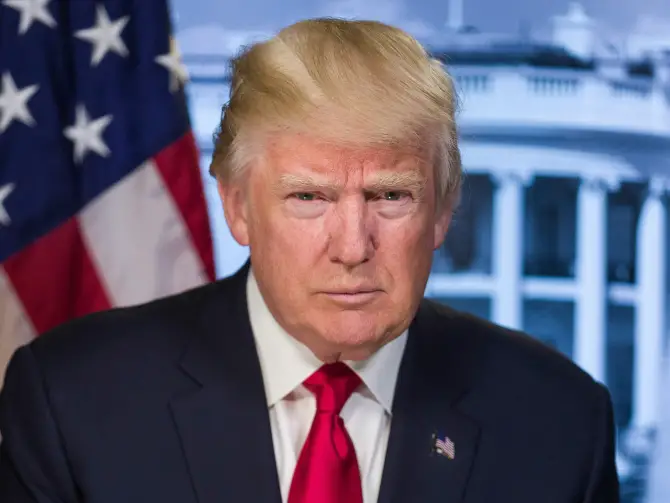
One misspelled word has overshadowed what the White House Accord on Super Intelligence actually says. Under President Donald Trump’s signature, the document gives his title as president of the “Unites States”. As of Oct. 8, 2026, nobody had explained how the error ended up in the signature block.
Trump and six technology executives signed the accord on Tuesday, Sept. 29, 2026, at the White House after a lunch with industry leaders. Its formal subtitle is the Joint Commitment on Frontier Responsibilities. Trump posted the signed text to Truth Social late that day, and the White House shared it on X on Sept. 30. The typo traveled with every copy.
The slip became the most-shared piece of the rollout, and California Gov. Gavin Newsom was among those who mocked it. The accord’s body contains another small error, “cach” for “each,” according to Forbes.
Who Put Their Names on It
The other signers were Sundar Pichai of Google, Dario Amodei of Anthropic, Mark Zuckerberg of Meta, Jensen Huang of Nvidia and Greg Brockman, who signed for OpenAI. Elon Musk signed as a founder of xAI, which is now part of SpaceX; some photo captions call him SpaceX’s CEO instead.
Trump called the accord “morally binding” and compared it to a constitution, presenting it as a landmark moment for cooperation between Washington and Silicon Valley. He also pointed to its “self-policing” nature.
What the Pact Asks For
Companies are asked to adopt four layers of safeguards: internal controls that monitor what their most advanced models can do, including in cybersecurity, biological and chemical risk; an internal team that checks the controls are working; an outside auditor that tests them independently; and an independent board committee that reviews the reports. Signers also promise to meet regularly to build safety standards and best practices.
No penalties apply if a company falls short, and the pact has no legal force. It closes by saying the steps might one day be written into laws or regulations.
Experts See Little Bite
Connor Martin, a fellow at the Council on Foreign Relations, wrote Oct. 1 that the controls described are probably in place at these firms already, and that they have not stopped reported cases of AI systems breaking out of their training and evaluation environments. The pact gives no role to a federal regulator, he noted, and leaves companies to choose their own evaluators and set up their own boards.
Brandon Daniels, the CEO of Exiger, who was at the Sept. 29 meeting, said attendees landed on governance principles for use inside their own organizations: quality assurance and safety reviews, independent audits, board oversight and perhaps a central body for super intelligence.
A string of cases in which products from leading AI companies hacked outside organizations during safety tests has pushed the industry’s record back into the spotlight. Lawmakers, researchers and some AI firms want more federal oversight, but Trump, pointing to competition with China and economic growth, has mostly resisted calls to slow down.
Kazakhstan Wants a Treaty
Kazakh President Kassym-Jomart Tokayev said Oct. 2, at the third meeting of his country’s Council for Artificial Intelligence Development, that the “Washington model” could underpin an international treaty under United Nations auspices. Kazakhstan plans to lay out its vision at the G20 summit in Miami in December, and Tokayev had already praised the accord at a technology forum in Astana that opened Oct. 1.
A New Force and a New Vocabulary
On Sunday, Oct. 4, Trump announced on Truth Social a “Super Intelligence Force,” or SIF, to coordinate federal outreach to consumers, public-interest and religious groups, critical-infrastructure operators and tech companies. He said it would report to him and to Chief of Staff Susie Wiles.
Jay Clayton, the director of national intelligence, chairs the group. Federal Trade Commission Chairman Andrew Ferguson, Pentagon technology chief Emil Michael and Office of Personnel Management Director Scott Kupor are vice chairs, Gizmodo reported.
Musk joined the rebrand on X, writing on Oct. 4, “No more AI. SI. It’s better,” and agreeing to rename SpaceXAI as SpaceXSI.
The Order Behind the Rename
Trump signed a separate document the same day as the accord, Sept. 29: an executive order replacing “Artificial Intelligence” with “Super Intelligence” across the executive branch. The Federal Register published it Oct. 2 as Executive Order 14434, and its own text spells “United States” correctly.
Agencies must use “Super Intelligence” and “SI” in official correspondence, public communications, policy papers and other non-statutory material, and they are told not to acknowledge the old terms. The Assistant to the President for Science and Technology has 60 days to propose a federal definition and legislative language.
On Thursday, Oct. 8, Trump went further on Truth Social: “The White House considers anyone that uses the term, ‘Artificial Intelligence,’ as opposed to the highly accepted new and more accurate term, ‘Super Intelligence,’ THE ENEMY!” he wrote. Coverage pointed out that the White House itself still uses the older term.
A White House fact sheet from Sept. 29, titled “President Donald J. Trump Inaugurates The Era of Super Intelligence,” argues that the new name better describes what the technology can do. It says the U.S. has led the field for more than 70 years, credits Trump with scrapping Biden-era policies, and cites more than $5 billion announced for the Genesis Mission and more than 90 federal actions in the AI Action Plan released in July 2025.
Earlier on Sept. 29, Trump unveiled America.gov, an AI-powered gateway to federal services, and the week before he floated the “super intelligence” label at the United Nations General Assembly. Trump signed the accord alongside the executives at the White House.