
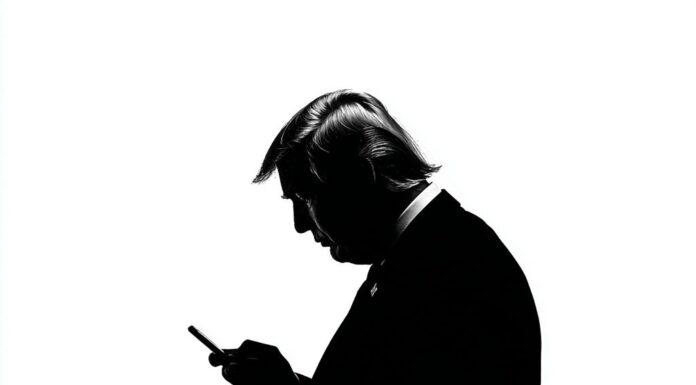
A cryptic social media post from President Donald Trump on Friday morning, April 10, left Americans puzzled about what the commander in chief meant by his latest declaration. The 79-year-old president did not explain his message on Truth Social, which read: “WORLD’S MOST POWERFUL RESET!!! President DJT.”
The mysterious statement came at a pivotal moment as Trump’s Iran ceasefire, announced just two days earlier on April 8, showed clear signs of falling apart. Pakistan brokered the two-week pause in hostilities after U.S. and Israeli strikes killed thousands of Iranian civilians and brought the region dangerously close to nuclear war during weeks of devastating attacks.
Major problems have already emerged with the ceasefire arrangement. Iran continues to keep the Strait of Hormuz effectively blocked despite the waterway’s reopening being a central requirement of the deal. The narrow passage between Iran and Oman normally handles about 25 percent of the world’s seaborne oil trade and 20 percent of global liquefied natural gas. Abu Dhabi National Oil Company CEO Sultan Al Jaber reported on April 9 that 230 loaded oil tankers remained stuck waiting inside the Gulf.
Iran is now imposing a toll on ships passing through the Strait—a fee structure that never existed before Trump launched the multibillion-dollar Middle East conflict in late February. The situation has since escalated further: Iran’s Revolutionary Guard seized two foreign vessels in the Strait and opened fire on a third. Trump ordered the U.S. Navy to shoot and destroy any Iranian boat caught laying mines in the waterway. In a striking admission on April 23, Trump revealed that Iran had offered to reopen the Strait but that he personally rejected the offer, saying the blockade increases financial pressure on Tehran to reach a deal. “They came to us and they said, ‘We will agree to open the strait,'” Trump told reporters. “So I’m the one that kept it closed.”
Trump expressed his frustration on Thursday, posting to Truth Social: “There are reports that Iran is charging fees to tankers going through the Hormuz Strait—They better not be and, if they are, they better stop now.” The threat raised questions about whether Trump might violate his own ceasefire agreement.
The president’s April 10 “reset” post arrived after a turbulent April 23 that saw him share extremely violent footage of a hammer killing, threaten military action over the Strait of Hormuz, and unleash a 482-word attack on influential MAGA personalities who have criticized his Iran war.
Trump shared a graphic video showing Haitian immigrant Rolbert Joachin repeatedly striking Nilufa Easmin, a 51-year-old Bangladeshi mother of two who worked as a gas station clerk in Fort Myers, Florida. The 40-year-old suspect was arrested for the April 3 killing. The Department of Homeland Security reported that Joachin first entered the U.S. in August 2022, received a removal order, but was granted Temporary Protected Status that later expired.
Trump defended posting the disturbing footage by claiming he had an “obligation” to share it, so that people can see what Democrats are protecting and who they are allowing into the country. His justification echoed his debunked 2024 campaign claims that Haitians in Springfield, Ohio, were eating people’s cats and dogs—a conspiracy theory that Springfield police, the city’s Republican mayor, and Ohio’s Republican governor all confirmed had no credible evidence behind it.
In his lengthy Thursday night tirade, Trump targeted Tucker Carlson, Megyn Kelly, Candace Owens, and Alex Jones—all prominent MAGA figures who have spoken out against the Iran conflict. The president attacked their intelligence, professional credentials, and families in unusually personal terms. He called Carlson a “Hand Flailing Fool” who “couldn’t even finish college,” labeled Owens “crazy,” and dismissed all four as “NUT JOBS” with “Third Rate Podcasts.”
The four commentators hit back hard. Owens posted a screenshot of Trump’s rant and wrote, “It may be time to put Grandpa up in a home.” Jones declared on his show that Trump was exhibiting “dementia” and called for the 25th Amendment to be invoked. Kelly said on her podcast that she was “sick of this ****” after Trump threatened to destroy an “entire civilization.”
Trump’s deteriorating relationship with these once-loyal supporters marks a dramatic shift in the political landscape. The Iran conflict has become a breaking point for many in his base who believed Trump’s “no new wars” promises from the 2024 campaign.
The president’s recent social media activity has also included attacks on California Gov. Gavin Newsom, whom Trump has labeled “Newscum” and mocked for his dyslexia. Trump has even suggested Newsom’s learning disability should disqualify him from seeking the presidency in 2028. Newsom has responded by calling Trump a “brain-dead moron who bombs children” and criticizing his administration’s handling of the Iran war and subsequent gas price spikes.
Trump’s cryptic Friday morning message provided no clarity on his intentions or what changes Americans should expect. The post coincided with March Consumer Price Index data showing the largest gasoline price spike since 1967, a direct consequence of the Strait of Hormuz closure that Trump’s war triggered. The national average stood at $4.06 a gallon as of April 24, according to American Automobile Association, with nearly 80 percent of Americans telling a CNBC poll they had changed their spending habits in response to higher fuel costs. Trump told Americans on April 23 to expect elevated prices “for a little while,” saying he was in no rush to finalize a deal with Tehran.
Some analysts interpreted the cryptic message as an attempt to frame the troubled ceasefire and its aftermath as a broader American strategic success, but the president provided no follow-up posts to explain the statement.
The Islamabad peace talks collapsed on Sunday, April 12, after 21 hours of negotiations, with Vice President JD Vance announcing no deal had been reached after Iran refused to commit to abandoning its nuclear program. Trump responded by ordering a U.S. naval blockade of all Iranian ports, effective Monday, April 13, at 10 a.m., a move Iran’s Revolutionary Guard warned would be treated as a ceasefire violation. Oil surged back above $100 a barrel on the news, with the average U.S. gas price hitting $4.13 a gallon, up $1.14 since the war began.
Trump extended the ceasefire on April 21, saying it would continue until Iran’s leaders submitted a “unified proposal” to end the conflict — an abrupt reversal from hours earlier, when he had warned Tehran that time was running out before a massive U.S. attack. The extension came at the request of Pakistani mediators. The White House later confirmed Trump had set no firm deadline for receiving Iran’s proposal. As of April 24, Iranian Foreign Minister Abbas Araghchi is expected to arrive in Islamabad with a small delegation for a second round of talks, with Pakistani mediators expressing confidence the negotiations would proceed.
Trump faces mounting pressure over his deeply unpopular Iran war. With the ceasefire deal showing signs of collapse, gas prices soaring, and MAGA influencers turning against him, Trump appears increasingly isolated even as he declares victory.
The chaotic 24-hour period underscores the volatility surrounding Trump’s presidency as he navigates an unpopular foreign conflict, rebellion within his own political base, and ongoing feuds with political opponents.