
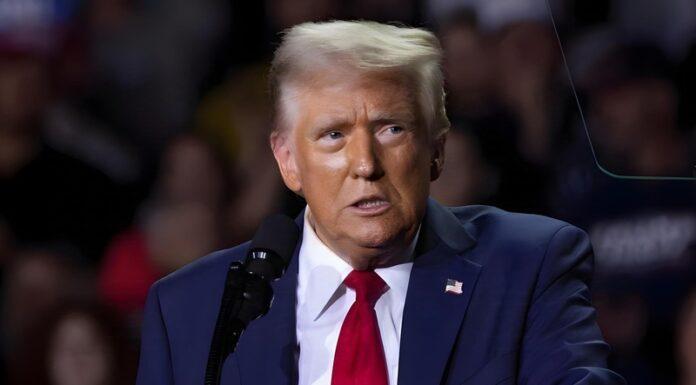
In a series of public appearances, clinical psychologist Mary Trump escalated her warnings about President Donald Trump’s fitness for office, arguing that decades of untreated mental health issues are colliding with advancing age to produce what she called an accelerating breakdown.
The 61-year-old niece of the president, whose father was the late Fred Trump Jr., appeared on July 13, 2026, on “Big Tent USA” alongside former CNN White House correspondent Jessica Yellin, where she described her 80-year-old uncle as trapped in what she termed a “perfect storm.” According to Mary Trump, the current crisis stems from psychiatric conditions that have gone unaddressed for years. “He’s somebody who has lived for decades with longstanding, undiagnosed, and untreated psychiatric disorders,” she said. “As with many illnesses, including psychiatric illnesses, when they’re left untreated, they worsen over time.”
Recent Iran Statements Raise Concerns
During the July 13 interview, Mary Trump singled out the president’s recent rhetoric on Iran as particularly alarming. Yellin characterized the language as carrying “a bloodlust to it that’s deeply unnerving.” The comments in question came via Truth Social posts, where President Donald Trump threatened to “completely decimate and destroy all areas of Iran” and claimed 1,000 Missiles were “Locked and Loaded” and targeting the nation. These threats followed Iran’s closure of the Strait of Hormuz after Israeli strikes on Iranian-backed Hezbollah militants, which itself came after the collapse of a preliminary peace deal the president had signed with French President Emmanuel Macron at the Palace of Versailles. Mary Trump suggested the posts demonstrated someone losing touch with his audience and context, frequently appearing disoriented about his location and listeners.
The G7 summit in Evian-les-Bains, France, became another flashpoint. Beyond the failed Iran agreement, the president attracted ridicule when he arrived late to a leaders’ session and announced himself as “the boss.” For Mary Trump, the episode provided fresh evidence that her uncle’s public behavior has grown increasingly erratic in ways that transcend mere personality quirks.
Newsletter Warning and Family History
The July 13 broadcast was Mary Trump’s second high-profile intervention in as many days. In a newsletter conversation on June 21 with journalist Steven Beschloss, 67, she described the president’s condition as impossible to hide any longer, citing his conduct at the G7 summit as proof that deterioration had become visible to outside observers. She characterized his trajectory as a “downward spiral,” echoing language she had used in January during an interview with CNN anchor Erin Burnett when she warned his state was “rapidly getting worse.”
In the June newsletter, she traced her uncle’s psychological profile back to his upbringing under Fred Trump Sr., describing a family environment that instilled a terror of being perceived as a failure. The president, she wrote, remains driven by the need to avoid exposure as incompetent, creating a performance that has become impossible to sustain as cognitive and physical capacity decline. “He’s experiencing constant narcissistic injuries,” she wrote, “and nothing terrifies Donald more than humiliation.”
Mary Trump also raised her family’s medical history with Alzheimer’s disease. Fred Trump Sr. suffered from the condition for nearly a decade, a fact she argued should inform any assessment of the president’s current behavior alongside observable changes in his conduct.
Medical Visits and Test Results
Health questions have shadowed the president’s second term. In late May, he made his third trip to Walter Reed Medical Center in 13 months, officially for routine medical and dental care. Over three hours, 22 specialists performed a CT scan, heart imaging, cancer screenings, and additional evaluations. Officials pronounced him completely fit for duty. President Donald Trump subsequently posted on Truth Social that he had achieved a flawless 30 out of 30 on what appeared to be the Montreal Cognitive Assessment, a screening instrument designed to detect dementia and cognitive decline, and boasted of a cumulative 120 correct responses out of 120 questions across four administrations of such tests.
On “Big Tent USA,” Mary Trump pointed to the pattern itself as significant. The repeated cognitive testing, coupled with the president’s public celebration of his scores, suggested an underlying anxiety worth examining. She argued that family history combined with visible behavioral shifts merited scrutiny even in the face of official reassurances.
Administration Dismisses Claims
The White House declined to address the specifics of Mary Trump’s allegations. White House Communications Director Steven Cheung, 44, dismissed her as a “stone-cold loser” lacking any credibility, characterizing her public statements as opportunistic inventions meant to sustain her media presence. The sharp rebuttal was consistent with the administration’s longstanding approach to her criticism, which officials have framed as a personal vendetta rather than a professional assessment.
Mary Trump holds a doctorate in clinical psychology and has published extensively on her uncle’s psychological profile, positioning herself as a vocal skeptic of his capacity to govern. Her comments marked a shift in emphasis, presenting the current period not as a troubled but stable administration but as a rapid unraveling fueled by the intersection of untreated psychiatric illness, biological aging, and the pressures inherent to the presidency.