
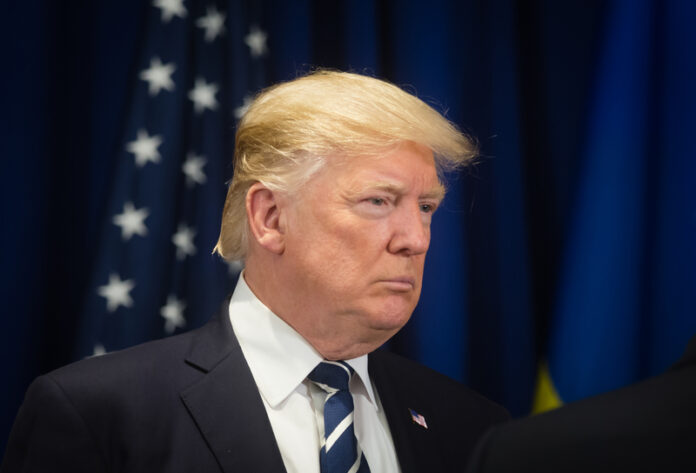
President Donald Trump’s sudden shift in tone on the war against Iran handed “Tonight Show” host Jimmy Fallon his material on his August 10, 2026, show, where the comedian skewered the president’s “low-keying it” approach to the conflict.
On the Monday broadcast, Fallon set the bellicose rhetoric Trump used earlier against his newly relaxed posture — and landed some of his sharpest lines yet. “Trump has now backed off his threats to launch more strikes,” the host quipped in a monologue transcribed by HuffPost. Trump had used the phrase in a phone interview with Axios the day before. He then took direct aim at how the president is selling it: “He says that his new approach is ‘low-keying it.’ We’ve gone from Operation Epic Fury to Operation Chillax Bruh.”
Trump’s Iran Strategy Under the Microscope
The administration’s war calculus, reportedly, has taken a serious turn beneath the punchlines. The Wall Street Journal reported that the president wants an exit ramp so badly that he has privately told senior aides he may be willing to give up the objective he has stated as his primary one — securing a deal with Iran to eliminate its nuclear weapons capability — so long as he can declare victory once the Strait of Hormuz is fully open. There is a notable irony undercutting that negotiating posture: the strait was already open when the military campaign launched back in February. August 17 arrived without a deal, the expiration of the 60-day deadline set under the June memorandum of understanding. Iran and Oman have since agreed on an alternate shipping route, yet Hormuz remains closed, leaving about 6,000 sailors aboard some 400 ships unable to get out, the International Maritime Organization said on August 28. This month, the campaign passed its six-month mark.
A missile shortage has also been reported, one that may be eroding Trump’s leverage at the negotiating table and adding to the administration’s difficulties. The White House’s hesitation about resuming strikes could be explained by that reported shortfall as well. Trump has denied the reports. Reuters reported that the Army had used “virtually all” of its ATACMS and Precision Strike Missile stocks; CBS News reported the long-range stockpile nearly depleted, and CNN reported interceptor levels for a key missile-defense system down by nearly 80 percent.
Fallon’s Earlier Missile Jab Still Resonating
Fallon had already mined the missile shortage for laughs before the August 10 monologue. Four days earlier, on August 6, the “Tonight Show” host pounced after Trump posted a threat on Truth Social that the “leakers” of what he called “treasonous statements” about the shortage “are being hunted down.” The comeback was deadpan and surgical: “Well, we know one thing. They’re not being hunted by missiles. We don’t have ’em.”
That punchline captured the formula late-night television has applied to the Iran war story for months — locating the absurdity where presidential bluster meets reported operational reality. With the conflict dragging on and no clear resolution in sight, both the bravado and its deflation keep resurfacing in Fallon’s monologues.
Lawmakers Press on Military Families’ Deportations
The war is not the only storyline giving the late-night desk material. A separate and equally serious controversy has been building around the administration’s immigration enforcement operations. Federal immigration agents rounding up the family members of active-duty U.S. service members are now the subject of an investigation opened by more than 60 Democratic lawmakers. What triggered the probe was a finding by the Associated Press: spouses and parents of troops numbering more than 50 have been caught up in the president’s immigration crackdown, and at least six of those family members have already been deported.
The Department of Homeland Security, the Pentagon and the Department of Veterans Affairs each received a letter on the evening of Sunday, August 9, in which the lawmakers spelled out their intent, vowing to determine whether those agencies are coordinating deportation efforts aimed at troops’ relatives. Such actions, they warned, “imperil military readiness, weaken service members’ morale, and betray America’s promises to the people who put their lives on the line for our nation.”
Critics — and late-night hosts — have found plenty to work with in the collision of that scandal with a war already straining resources. Comedy has come reliably out of the through line Fallon has drawn from the Iran war’s stumbles to the broader political turbulence of the Trump administration; for many viewers, it doubles as a way of processing a moment in American foreign and domestic policy that is genuinely unsettling.
Events have moved hard since the monologue. On August 24 the Treasury imposed secondary sanctions on nearly 60 individuals, entities and vessels, in what Secretary Scott Bessent called “economic asphyxiation.” On August 27 Trump declared the strait open — “That sucker is open,” he told Axios — though Central Command said it had redirected 75 ships since resuming its blockade in July, and the commodities firm Kpler counted transits down to about five a day over the following weekend. On Sunday, August 30, U.S. forces struck two Iranian rocket launchers on Larak Island, the first publicly reported American attack on Iranian positions in more than a month; Iran said it answered with missiles and drones against two bases housing U.S. troops in Jordan. Whether the president’s newly mellow “low-keying it” approach was a genuine strategic recalibration or a retreat in disguise, it is no longer the question the monologue was asking.