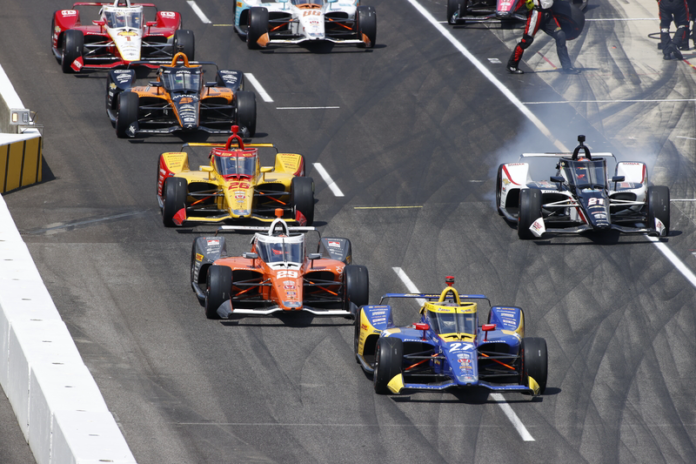
Chris “Block” Gordon, the veteran South Carolina drag racer who captained his home-state team on Discovery’s “Street Outlaws: Fastest in America,” was killed on August 22, 2026, when a race went wrong at KD Motorsports Park, a dragstrip in South Webster, Ohio. Gordon was 55, according to the outlets that reported his death, and lived in Moncks Corner, S.C. His death at the small-town Ohio track has stunned both the reality television audience that knew him and the racing world that raised him.
The track broke the news itself the following day, August 23, in a Facebook statement. “As most of you know by now, we had a devastating accident last night at the track involving our great friend and fellow racer, Chris ‘Block’ Gordon,” read the post from KD Motorsports Park, which said the wreck had cost him his life.
What Happened at the Ohio Track
Its own crew reached Gordon without delay, the venue said, and trained medical staff, firefighters and EMTs with equipment on site pitched in, along with spectators who had medical training. Nobody there left anything untried, according to the statement.
The South Webster-Bloom Township Fire Department logged the call at 8:05 p.m. that Saturday, and crews reached the track minutes later. An ambulance took Gordon to Southern Ohio Medical Center in Portsmouth, where physicians pronounced him dead. Dispatch records obtained by TMZ and published August 26 show that air transport was requested minutes after the first call and that dispatch was told the helicopter had an estimated 40-minute arrival time; Gordon went into cardiac arrest in the ambulance before responders decided to drive him straight to the hospital. The track said nothing more about how the wreck unfolded, and it asked racing fans to hold off on guesswork and uninformed opinions while the family mourns.
In the same post, the track asked readers to keep his family in their thoughts and prayers “as we all try to mourn the loss of this good man, an absolute legend of our sport.” It closed with the phrase racers save for one another: “RIP ‘Race in Peace’ my friend you will be missed by so many.”
The South Carolina Street King
Television audiences knew Gordon as a fixture of a franchise built on outsized personalities and no-prep asphalt. He appeared on “Street Outlaws: Fastest in America,” the Discovery spinoff of the network’s flagship “Street Outlaws” that debuted in 2020. The format pits eight regional squads against one another, with $100,000 on the line for the winning team in what the network bills as the country’s biggest street race.
The program crowned him the “South Carolina Street King,” and he led Team South Carolina, an underdog outfit that took out St. Louis in the opening round of the first season before Detroit knocked it out in the second. Memphis took the $100,000 that year, beating New Orleans in the final. Gordon returned for the second season, which ended without a South Carolina win either. Off camera, he had earned respect on his home state’s racing scene and was a familiar name at tracks well beyond it.
He had a job to do at KD Motorsports Park that night rather than a seat in the stands. A flyer that billed him as the race master — the event’s promotional poster — went up on Gordon’s personal Facebook page on the morning of the race. “It’s race day at the Hill. Drivers meeting @ 6:15. Let’s get busy,” he wrote. He was also behind the wheel: he ran a 1979 Ford Fairmont nicknamed Mayhem, built for the small-tire class, and the track’s first post that night asked readers to lift up “the driver and his family.”
Condolences have since flooded the comments on that post, turning it into a memorial. Friends, fellow drivers and fans called him an unforgettable legend of local street racing; others said he ranked among the nicest people in the sport.
Tributes and a Push to Bring Him Home
Gordon’s fiancée, Amanda Laport Grasty, wrote the hardest tribute to read. “I lost my best friend and I don’t know how to navigate life without him in it,” she wrote on her own Facebook page. The track’s statement referred to her as his wife; the two outlets that reported on her call her his fiancée.
“I have tried multiple times to make a post but to be completely honest, I don’t know what to say, I don’t know what to think, I don’t know what to feel, I don’t know what to do,” she wrote. “I AM SHATTERED!!!!”
In a later post she wrote that she had made it back from Ohio and had to focus on getting Gordon home, and asked for prayers that she could make good decisions. “We did EVERYTHING together, from the time we woke up in the morning until he kissed my forehead good night EVERY NIGHT,” she wrote. “We were a TEAM and now I’ve lost my MVP. There is no ‘I’ in ‘team’ so now I don’t know how ‘I’ am supposed to continue.”
Gordon’s friends and family opened a GoFundMe campaign on August 23, organized by Jessica Litchfield on Grasty’s behalf, to help with medical bills and funeral expenses. It raised $4,815 of a $50,000 goal from 61 donations, and it is no longer taking money: an update posted September 3 thanked donors, said all of it went to the funeral, and closed the page to further contributions. That kind of fundraiser is a practical reality of grassroots motorsports, a world where drivers routinely cross state lines and cover hundreds of miles for small payouts in front of hometown crowds. The community, in turn, closes ranks whenever one of its own does not make it back.
The circumstances of the crash remain undisclosed more than two weeks on. A Scioto County sheriff’s official declined to discuss what caused the wreck, the track declined as well, no coroner’s finding has been released and no cause has been established publicly. His fellow racers have offered the only thing available to them: the checkered flag, lowered.