
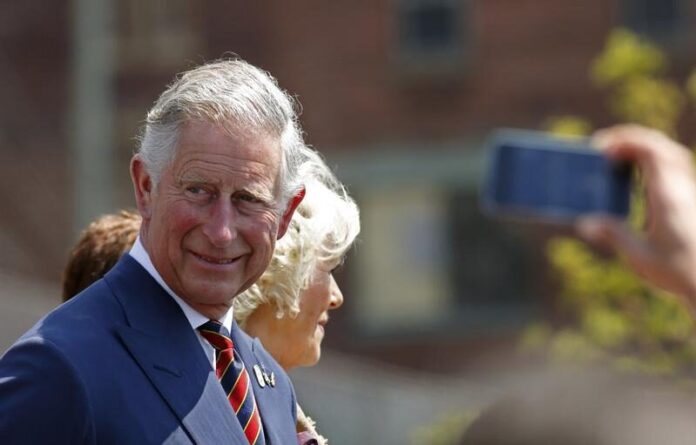
Days before King Charles III touched down in Washington for a high-stakes state visit, city workers accidentally decorated a prominent downtown corridor with Australian flags instead of the British Union Jack, triggering an embarrassing scramble to fix the mistake before the monarch’s arrival.
The blunder unfolded along 17th Street NW near the Eisenhower Executive Office Building on April 24, 2026, when 15 Australian flags were mistakenly hoisted among more than 230 banners. Photographs of the mix-up quickly circulated on social media, prompting the D.C. Department of Transportation to pull down the incorrect flags within hours.
“We posted those flags, but it was quickly rectified, and we were able to remove them,” a department official told The Washington Examiner.
A Defensible Mistake, if Barely
The confusion likely arose because Australia’s flag incorporates the Union Jack in its upper-left corner, set against a deep blue background dotted with six white stars. The agency is reviewing how the mix-up occurred, given that flags are typically stored and labeled.
There is a thin technical defense: King Charles is also Australia’s head of state, albeit in a largely ceremonial capacity. Australians delivered tongue-in-cheek commentary about the swap on social media. Freelance reporter Andrew Leyden posted photographs showing local government workers replacing the Australian banners with Union Jacks along the same stretch of road.
Officials stressed that the error was confined to a single corridor. British flags had already been correctly installed along other ceremonial routes.
A Visit Heavy with Symbolism
The king’s four-day state visit began on April 27, marking the 250th anniversary of the U.S. Declaration of Independence — a delicate piece of diplomatic theater, given that the document announced the colonies’ break from his ancestors’ rule. It is the king’s first state visit to the United States as monarch, and is widely regarded as the most high-profile trip of his reign so far.
The itinerary was dense. On the evening of April 27, the president and first lady hosted a state dinner in the East Room. Charles held a private meeting with President Trump at the White House and on April 28 delivered an address to a joint meeting of Congress — only the second time a British monarch has done so, following Queen Elizabeth II in 1991. Beneath the humor and pageantry, the speech carried a pointed political subtext: Charles defended NATO, emphasized checks on executive power, and warned against isolationism, all while carefully avoiding confrontation with Trump.
The royal couple then travelled to New York, where they attended a ceremony at the September 11 memorial ahead of the 25th anniversary of the attacks, before finishing the U.S. leg in Virginia at Shenandoah National Park. From there, the king headed to Bermuda, a British overseas territory where he is also head of state. The royal couple departed from Joint Base Andrews on April 30, concluding the four-day visit.
Charles and Camilla last visited Washington, D.C., together in 2015, when, as Prince of Wales and Duchess of Cornwall, they met President Obama at the White House.
Strained Ties Across the Atlantic
The visit came as the so-called special relationship has sunk to its lowest point in 70 years amid friction over the war in Iran and ongoing trade threats from President Trump. In April, the president told Britain to “go get your own oil” from the Strait of Hormuz. He has previously dismissed Prime Minister Keir Starmer as “not Winston Churchill” and mocked Britain’s aircraft carriers as “toys.”
Trump, however, has remained effusive about the king himself. Asked by the BBC whether the visit could help repair ties, the president said: “He’s fantastic. He’s a fantastic man. Absolutely, the answer is yes. I know him well. I’ve known him for years. He’s a brave man, and he’s a great man.”
During Trump’s own state visit to the U.K. in September 2025, Charles hosted him at a Windsor Castle banquet attended by tech CEOs, media magnate Rupert Murdoch, and other prominent figures, and invited the president to inspect the Guard of Honour.
Nigel Sheinwald, Britain’s ambassador to Washington from 2007 to 2012, told Reuters the trip was not designed to repair governmental acrimony but to demonstrate something deeper. “Pretty much more than any other visit, this is about the long term. This is about the fundamentals of the relationship between our peoples, our countries.”
An Unenthusiastic Audience at Home
The royal visit has not landed well with the British public. A YouGov poll published in late March found that 49 percent of Britons opposed the trip, while just 33 percent said it should go ahead. The Liberal Democrats and the Greens had publicly called for the visit to be canceled, leaving Nigel Farage’s Reform UK as the only major party supportive of it.
The flags, at least, are now in order.