
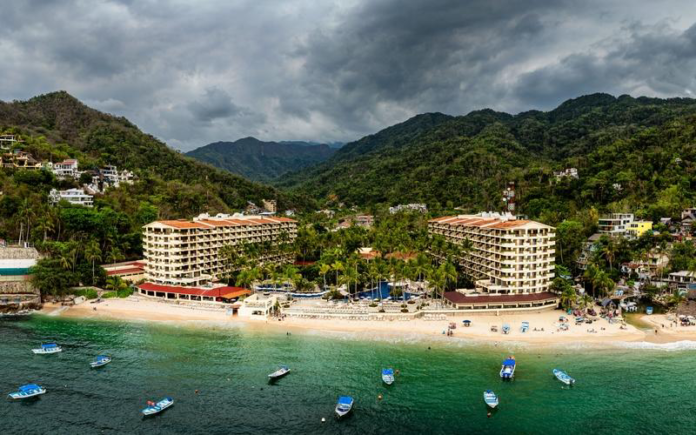
Between May 10 and May 21, 2026, the bodies of three women were discovered in isolated areas on the outskirts of Puerto Vallarta, Mexico, raising fears among investigators that a serial killer might be operating in the popular beach destination. Prosecutors formally denied on May 27, 2026, that evidence pointed to a single perpetrator.
Elizabeth Galindo Martinez, 22, was identified as the most recent victim after disappearing on April 29. Her body bore distinctive tattoo designs including a skull, a horned female figure and a written name on her neck, hands and arms, along with evidence of trauma.
The other two victims, both believed to be women in their 20s to mid-30s, remain publicly unidentified. Investigators noted that each showed different suspected manners of death: trauma from a sharp object, suspected drug overdose or possible poisoning, and water-related suffocation.
Authorities first found a woman’s body near Rancho El Piruli, a popular scenic overlook in Chimborazo, on May 10. A week later, a second victim was located at a rest area on the highway toward Mismaloya. The third body surfaced on May 21 in a remote location, triggering the launch of an extensive homicide inquiry.
A Disturbing Pattern Emerges
Detectives in Puerto Vallarta are examining whether the crimes display similarities and whether one individual might be accountable, as common elements link all three incidents. Each victim had notable body art, was found partially clothed and was discovered in remote locations on the periphery of one of Mexico’s premier vacation hotspots.
The distinctive markings on Martinez sparked online discussion regarding her identity, though uncertainty about the victim’s actual age relative to some missing person cases being debated on the internet had made confirmation challenging.
Law enforcement officials are analyzing video footage from roadways and peripheral neighborhoods, attempting to reconstruct the paths of both the deceased and whoever abandoned them in wooded areas, along roadsides and on unpaved routes at the city’s border. Investigators are examining video recordings, physical evidence and eyewitness statements as they search for connections among the murders.
Detectives are also contemplating the alarming possibility that the victims were killed elsewhere and their remains transported into Puerto Vallarta before being dropped, a possibility that would significantly broaden the geographic dimensions of the investigation. The case is still in its initial phase.
A Tourist Haven Under Strain
Before May 2026, Puerto Vallarta was associated with unspoiled Pacific coastline, comprehensive resort packages and a continuous flow of American holidaymakers. The city wrapped up 2025 having welcomed over six million visitors, predominantly from the United States, enjoying record tourism numbers by all accounts.
That image has suffered repeated damage. In February, the surrounding region experienced a surge in organized crime violence following the elimination of Jalisco New Generation Cartel chief El Mencho in a government raid. Vengeful cartel operatives set fire to public transportation, ransacked businesses, and set up numerous barriers nationwide in retaliation, essentially paralyzing Guadalajara through a violent uprising.
Vehicles were torched, creating massive smoke clouds that made the area resemble a conflict zone, observers reported. Alarming video showed visitors running through the Guadalajara airport terminal as armed gang members rushed inside, discharging firearms. Hundreds of tourists and residents sheltered in residences and accommodations while fighting persisted throughout the day and evening, leaving U.S. travelers stuck in the region as they witnessed the violence spread.
The wider situation has attracted attention beyond the three specific incidents. Five women were killed in Puerto Vallarta during the initial five months of 2026 alone, compared with three during the entire previous year, a fact that has sparked calls for clarification from city administrators.
Travel Industry Urges Caution
Travel sector professionals argue that the mix of gang-related instability and a potential homicide spree is requiring American tourists to reassess trips to Mexico’s western coast. Paul Tumpowsky, Chief Revenue Officer for Fora Travel, recommended that tourists stay alert, though not excessively, to spoil their experience, but instead be cautious. Tumpowsky told the New York Post that visitors should carefully assess and prepare for the degree of potential danger they find tolerable.
U.S. travelers contemplating a visit to the area should be informed that the U.S. State Department currently rates Jalisco, the state encompassing Puerto Vallarta, at Level 3, advising travelers to reconsider travel due to terrorism, crime, and kidnapping.
Hunt for Answers Intensifies
The government’s dismissal of the serial killer hypothesis has faced opposition. Yussara Canales, a regional representative for Puerto Vallarta’s 5th district, conveyed to the New York Post her conviction that the dismissal reflected commercial considerations rather than factual investigation. “Let me tell you why I think they did it: because, sadly, this news is making international headlines. It is leaving our port city in a very bad light,” she remarked, implying that prosecutors were influenced by the city’s proximity to Guadalajara, which will host World Cup matches.
The circumstances could scarcely be more unfortunate for Mexico’s administration. The nation is preparing to jointly organize the World Cup, with matches beginning June 11. Nearly 100,000 law enforcement, military personnel and security officers will be stationed to safeguard spectators at various Mexican arenas, including venues in Mexico City, Monterrey and Guadalajara, with significant security coverage also at spectator areas, airline terminals and transit centers.