
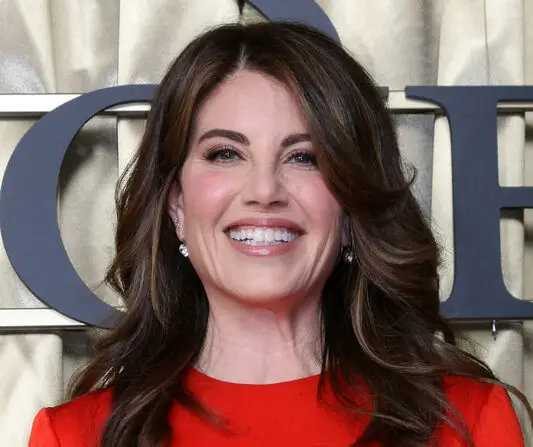
Monica Lewinsky has opened up about the grueling emotional labor required to move beyond the public humiliation that consumed much of her adult life. Speaking with actress Jamie Lynn Sigler on a recent installment of “Reclaiming with Monica Lewinsky,” the 52-year-old advocate discussed how learning to accept her past became the foundation for everything that followed.
Sigler had joined the podcast to discuss her book, “And So It Is…: A Memoir of Acceptance and Hope,” and the title resonated deeply with Lewinsky. She described acceptance not as a sudden breakthrough but as a necessary threshold that unlocks the possibility of genuine healing.
“It’s such a big part of reclaiming, actually. You really can’t move through all the steps until you’ve had acceptance,” Lewinsky said on the podcast.
Bringing Her Younger Self Forward
Central to Lewinsky’s recovery was her refusal to disown the 22-year-old intern she once was. Rather than severing ties with that version of herself, she worked to integrate her past identity with her present one. That integration, she stressed, becomes achievable only after acceptance is reached.
She was forthright about the effort involved. There was “so much work,” she acknowledged, in bridging those two selves and silencing the harsh inner voice that still surfaces. Her approach was almost clinical in its practicality: given how punishing the outside world can be, she asked herself how to make her internal environment less hostile.
Lewinsky became a household name in 1998 after revelations surfaced about a sexual relationship she had with then-President of the United States Bill Clinton while working as a young intern at the White House. The fallout included intense media scrutiny, relentless public mockery, and a political crisis that led to Clinton’s impeachment. Her involvement in a scandal she never sought turned her into a national symbol of shame.
Surviving What She Calls a ‘Dark Decade’
Throughout this year, Lewinsky has spoken repeatedly about what she terms her dark decade, offering increasingly nuanced accounts of that period. She has previously addressed enduring the judgment of strangers on a global scale and admitted that a need to feel important contributed to bad decisions she made in Washington.
The defining characteristic of that decade, she explained, was its unbroken bleakness. There were no moments of respite to interrupt the onslaught. Every time she thought circumstances could not worsen, they managed to prove her wrong.
Getting through those years required what Lewinsky identified as dissociation, a psychological tool that allowed her to create necessary distance from an otherwise crushing reality. Reflecting now, she said the mere fact of her survival still feels pretty miraculous.
Power Redefined Through Friendship
Years of internal reconstruction have fundamentally changed how Lewinsky thinks about power. Where she once associated the concept with traditional forms of influence, she now frames it in terms of relationships and emotional reciprocity.
One of the clearest expressions of that shift appears in her friendships. Lewinsky revealed that she values moments when those close to her turn to her for support during difficult times. After spending years convinced she was nothing more than an object of public mockery, she now sees a friend’s willingness to be vulnerable with her as an act of trust rather than a burden.
That transformation is especially notable for someone whose most visible years were marked by isolation and scorn. The woman once subjected to unrelenting ridicule has deliberately constructed a life centered on empathy and genuine human connection.
Through her podcast, Lewinsky has created a platform for conversations with people like Sigler who understand the challenge of reconstructing an identity after a public collapse. In their exchange about Sigler’s memoir, Lewinsky returned to the principle at the heart of her own journey: acceptance must come first. Only by making peace with the person she had been, she explained, could she stop carrying shame about her — and finally allow that younger self to come along.