
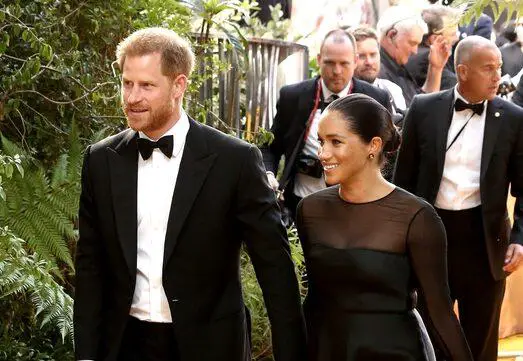
A reunion between King Charles and his younger son in July has nudged public sentiment toward Prince Harry into slightly warmer territory, new polling data reveals. The Duke of Sussex saw his favorability climb to 33 percent in a YouGov survey fielded July 21-22, marking a three-point gain from the 30 percent recorded in late April, according to the quarterly tracker that measures British attitudes toward the Royal Family.
That shift follows a July 10, 2026 gathering at Highgrove, the monarch’s Gloucestershire estate, where Harry appeared alongside Meghan Markle and their two children, Prince Archie and Princess Lilibet. The California-based family spent five days in the country, giving Charles his first in-person contact with the grandchildren in several years.
Yet the overall picture remains bleak for the Duke. Fifty-eight percent of those surveyed continue to view him negatively, with the rest undecided. The approval figure represents a six-point climb since May 2025, when Harry registered 27 percent, while disapproval has slipped four points from 62 percent, the data shows.
The Monarch Hits a High Note
King Charles recorded his strongest performance since taking the throne, with 68 percent of respondents saying he is doing a good job as monarch. His personal favorability has remained between 59 percent and 63 percent over the last two years, and support for the institution itself has held steady near two-thirds throughout his reign.
The Prince and Princess of Wales continued to dominate the survey, earning 76 percent and 74 percent favorability—numbers that have barely budged across multiple polls. Princess Anne claimed third place at 70 percent, her reputation as the family’s hardest-working member intact. Sophie and Prince Edward registered 51 percent and 53 percent approval respectively.
At the bottom of the rankings, the picture grew darker. Princesses Beatrice and Eugenie, who have largely avoided public attention in recent months, appeared in this type of YouGov survey for the first time, posting 30 percent and 29 percent. Meghan Markle stood at 22 percent, a three-point uptick. Andrew Mountbatten-Windsor, the former Prince Andrew, languished at the bottom with two percent approval and 92 percent negative sentiment.
Reconciliation Signals and Court Defeats
Royal observers have linked the modest uptick in Harry’s standing directly to the Highgrove visit. Tracy Schaverien, HELLO!’s royal contributor, said bringing Meghan and the children demonstrated the Duke’s commitment to mending family ties. Harry himself has stated publicly that he would welcome a reconciliation and that continuing the conflict serves no purpose.
The Duke’s favorability has been in decline since 2017, the year of his engagement to Meghan, and he has not served as a working royal since 2020. The Highgrove meeting came on July 10, roughly 11 days before the survey was conducted, and followed a difficult stretch for Harry. He recently lost a court case against Associated Newspapers Limited, publisher of the Daily Mail, and now faces legal costs expected to run into the millions. People close to the Duke described him as upbeat despite the strain, though those around him acknowledged the period had been taxing.
Archie and Lilibet’s previous extended visit with their grandfather occurred during the June 2022 Platinum Jubilee festivities, at which point the children were aged one and three. Whether the poll’s glimmer of good news endures—or survives the financial fallout from the legal defeat—is uncertain.
William’s Absence and the Entrenched Rift
Prince William was notably missing from the Highgrove afternoon, and the breach between the brothers shows no sign of healing. During the week Harry visited, William visited the London Welsh School on July 7, made a trip to Hastings on the south coast the following day on July 9, and appeared with the Princess of Wales at Guards Polo Club in Windsor for The Royal Charity Polo Cup 2026 on Friday, just hours before news emerged of the meeting.
Robert Jobson, who wrote the biography “The Windsor Legacy,” told Newsweek William harbors no intention of reconciling, characterizing the prince as feeling deeply betrayed by Harry and considering the situation permanently resolved. Ingrid Seward, author of “My Mother and I,” described William’s posture toward the reconciliation as complete disinterest.