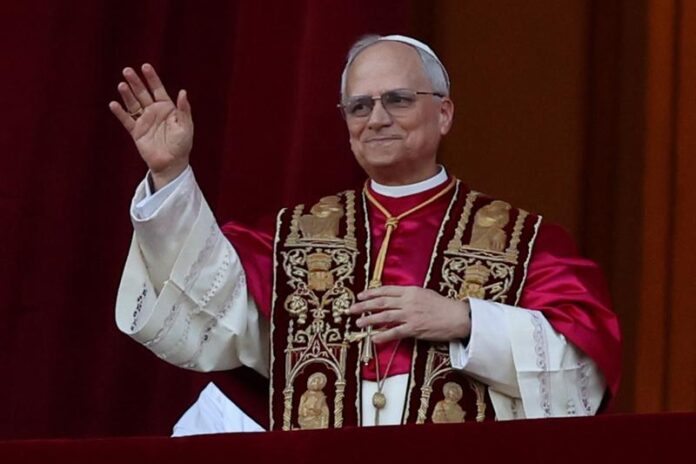
In a televised conversation that aired Wednesday, the 70-year-old pontiff from Chicago delivered what many interpreted as a rebuke to current White House policy. Pope Leo XIV used his debut American television appearance since taking office to extol immigration as central to what he cherishes about his homeland — speaking warmly of how the United States has historically welcomed wave after wave of arrivals from distant shores.
NBC anchor Tom Llamas interviewed the religious leader in the Borgo Laudato Si’ papal gardens near Rome, asking what aspects of America the pope holds dear. His response emphasized freedom, founding principles, and opportunity before highlighting the nation’s multi-generational tradition of “having invited for generations people from around the world to be part of America.”
The timing carried unmistakable weight. President Donald Trump has centered his agenda on curtailing migration, creating an explicit clash with the leader of the world’s Catholics — who happens to be the first American ever elected to the papacy.
A Running Feud With the White House
Tensions between the Vatican and the administration have escalated into public exchanges. The president has derided the pontiff as “weak on crime” and “terrible for foreign policy.” Vice President JD Vance, who joined the Catholic Church as an adult, has questioned whether the pope properly grasps church doctrine. Meanwhile, Leo has branded the current approach to border enforcement as “inhuman.”
The pontiff told NBC he remains unafraid of pushback from Washington and committed to preaching what he described as the gospel’s core mandate. White House officials had no immediate comment.
While NBC anchor Lester Holt had previously engaged with the pontiff at a global media gathering last year, this week’s sit-down represented the Chicago native’s first appearance on American television since his historic election.
A Personal History Rooted in America’s Story
The pope anchored his remarks in family history, referencing genealogical research completed last year. Both sets of his grandparents arrived as immigrants, he explained, and his maternal ancestry reveals a troubling duality.
“I come from a family that—my grandparents were immigrants. On my mother’s side, we have people who were both slaves and slave owners,” the pontiff said. He characterized that legacy as illustrative of what he considers among the country’s most profound strengths, vowing to uphold the ideals that have historically shaped the American identity.
Choosing Lampedusa Over Washington
Despite ongoing friction, the White House invited the pontiff to participate in celebrations marking the country’s 250th anniversary. The Vatican declined, announcing instead that he would journey to Lampedusa, Italy — the tiny Mediterranean island where countless migrants make landfall after perilous sea crossings.
On July 4, 2026, the pope led a procession and celebrated Holy Mass there. Father Antonio Spadaro, undersecretary at the Vatican office responsible for culture and education, characterized the decision as intentional — an American religious leader choosing on his nation’s birthday to stand not within its boundaries but at what Spadaro termed the wounded threshold of the Mediterranean. The gesture itself, Spadaro suggested, communicated volumes without issuing a formal declaration.
Spadaro framed the trip as offering an alternative vision rather than outright confrontation. He noted it occurred precisely when the United States had elevated border closure to a flagship achievement — something the American-born pontiff grasped intimately. According to Spadaro, the pope avoids finger-pointing but instead reminds humanity that divine dignity transcends any frontier.
Ahead of the anniversary, the pontiff sent written correspondence to the United States articulating his position in theological language. He argued that safeguarding human existence demands that countries accept, house and aid those fleeing across borders seeking refuge. He maintained that extending compassion and hospitality toward migrants honors the intrinsic value every human being holds.
The combination of the broadcast interview, written message and symbolic pilgrimage reveals a unified Vatican stance — responding to the administration’s enforcement measures not through direct combat but through unwavering emphasis on migrants’ moral standing. For a spiritual leader who shares the president’s birthplace, their divergent visions of national greatness have carved one of the most visible rifts separating Rome from Washington.